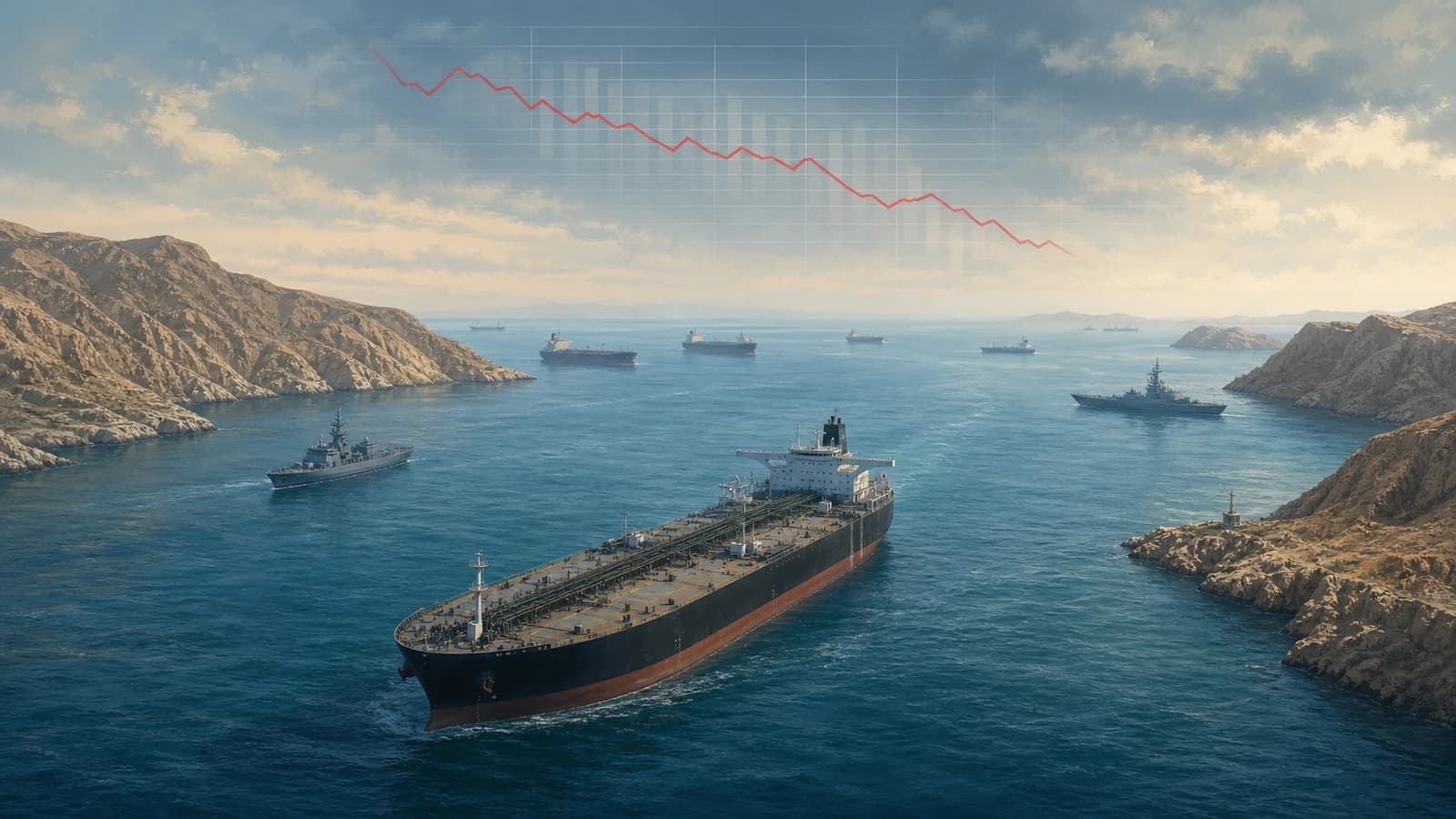
Oil futures fell after the United States and Iran paused attacks over the weekend. The pause was not a formal ceasefire, and traffic through the Strait of Hormuz remained restricted.
Oil futures fell sharply on Monday, July 27, 2026, following a weekend pause in attacks by the United States and Iran. September West Texas Intermediate crude settled down $6.70, or 7.5%, at $82.61 a barrel. September Brent fell $8.42, or 8.7%, to $88.36, while the more actively traded October Brent contract settled 6.3% lower at $85.87. The attacks had paused, but shipping through the Strait of Hormuz remained sharply constrained.
WTI and two Brent contracts recorded different settlements
| Benchmark | Delivery month | Settlement | Daily change |
|---|---|---|---|
| WTI | September 2026 | $82.61 | -7.5% |
| Brent | September 2026 | $88.36 | -8.7% |
| Brent | October 2026 | $85.87 | -6.3% |
September WTI closed at its lowest level since July 16, and September Brent reached its lowest settlement since July 17. Brent had traded above $100 a barrel during the previous week as attacks disrupted energy shipments through the Strait of Hormuz and the Red Sea.
The two Brent figures refer to separate delivery months. September remained the nearest contract, while trading activity had shifted to October. Their settlement prices and percentage changes therefore describe different contracts and are not interchangeable.
The attack pause was not announced as a formal ceasefire
U.S. Ambassador to the United Nations Mike Waltz said President Donald Trump paused U.S. attacks to allow more time for diplomacy. An Iranian army spokesperson said Iran stopped its attacks after the American pause. As of Monday, neither side had reported a direct attack for three days.
Trump said the United States was holding what he called good talks with Iran. Iran's Foreign Ministry spokesperson Esmail Baghaei said there were no direct negotiations and that mediators could carry messages from the United States. Regional officials said Qatar and Pakistan were working to bring the two sides back to an interim arrangement.
No formal ceasefire or signed framework governing ship traffic through the Strait of Hormuz had been announced by Monday's oil settlement.
Traffic through the Strait of Hormuz stayed depressed
Fewer than 10 commodity vessels a day passed through the Strait of Hormuz over the weekend, according to Kpler shipping data cited by Reuters. Before the war, the route normally carried about 20 million barrels a day of crude oil, condensate and refined products.
Ole Hvalbye, a market analyst at SEB Research, estimated that flows were running at roughly 15% of their prewar level. StoneX energy strategist Alex Hodes also said shipping volumes remained heavily depressed and that Saudi cargoes using Red Sea routes faced longer and more expensive journeys.
Iran's Foreign Ministry said Monday that the strait remained closed while talks with Oman continued over a mechanism for safe navigation. The U.S. military said its naval blockade remained in effect and that 17 commercial ships had been redirected, two disabled and two boarded during the operation.
Other attacks continued around regional oil facilities
Saudi Arabia said its air defenses destroyed drones launched by Iran-backed militias in Iraq toward petroleum facilities. Yemen's Houthi movement separately claimed an attack on Saudi oil installations. It was not clear whether the two statements referred to the same incident, and no casualties or damage were reported.
PVM analyst John Evans said the pause in military strikes did not guarantee that oil shipments would resume soon. At the end of July 27, the United States and Iran had paused direct attacks, while the Strait of Hormuz remained restricted and no formal shipping agreement had been announced.
Sources
Reuters · Business Recorder — Oil futures settlement on July 27, 2026