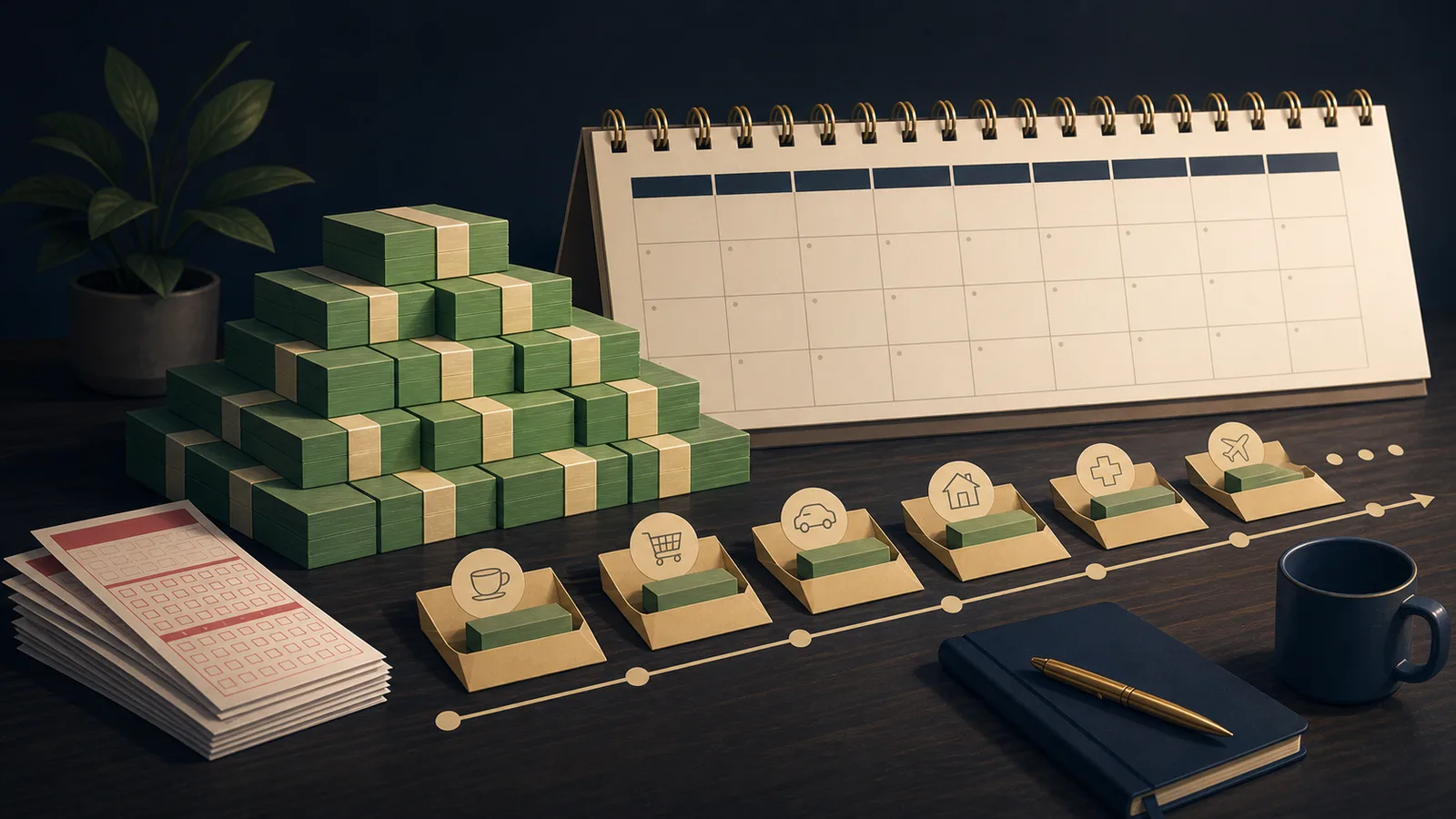
If $1 million is spread over 30 years with no return, it becomes about $91 per day or about $2,778 per month before taxes, fees, inflation, and spending changes.
A lottery prize does not have to be a giant national jackpot to be interesting. Even $1 million can feel huge at first. The more useful question is what happens after the headline: if that money has to support spending for decades, how much does it actually give you per day?
This article uses $1 million as the starting amount. It assumes no investment return, so the calculation is just a clean spend-down of the principal.
$1 million over 20, 30, and 50 years
The shorter the period, the more you can spend each day. The longer the period, the more ordinary the number becomes.
| Spending period | Monthly spending | Daily spending |
|---|---|---|
| 20 years | About $4,167 | About $137 |
| 30 years | About $2,778 | About $91 |
| 50 years | About $1,667 | About $55 |
This is why a prize can be both large and limited. $1 million is a lot of money, but it is not the same thing as unlimited spending. Over 30 years, it is closer to a monthly budget than a permanent fortune.
What if the money earns 4%?
If the remaining money earns a steady 4% annual return, the 30-year number changes. The calculator estimates about $157 per day, or about $4,758 per month.
| 30-year setup | Monthly spending | Daily spending |
|---|---|---|
| 0% annual return | About $2,778 | About $91 |
| 4% annual return | About $4,758 | About $157 |
That does not mean 4% is guaranteed. It only shows why the return on the remaining principal matters when money is being spent over a long period.
The point is scale
Lottery money is easy to imagine as one big number. Spending it over time turns it into a monthly or daily number. That number is often more useful.
This is a simple calculation example, not lottery buying advice or investment advice. Lottery odds are very low, and real life includes taxes, fees, inflation, changing returns, and changing spending needs.