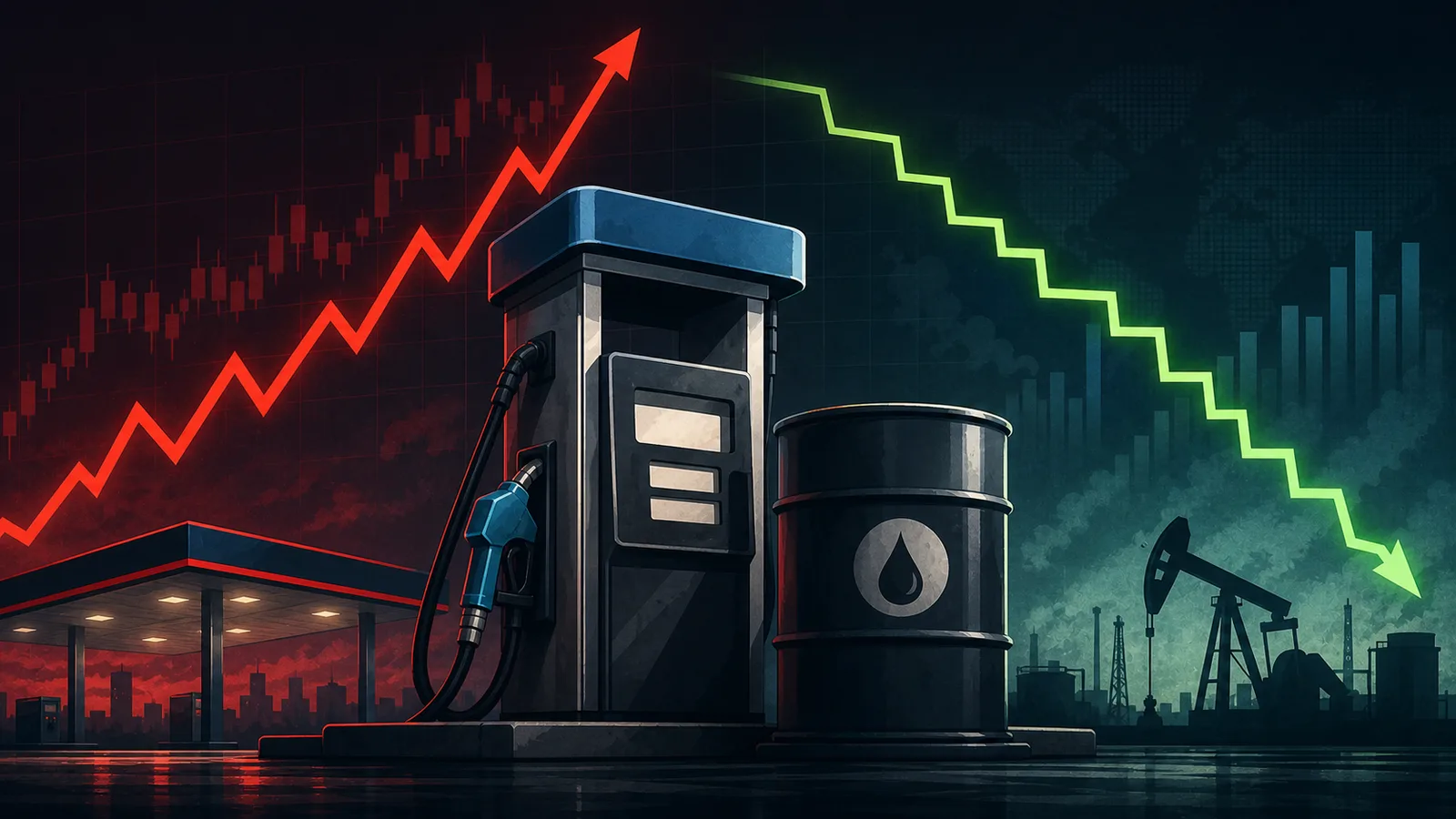
When crude oil rises, sellers quickly price in the cost of the next fuel shipment. When crude falls, older inventory, taxes, refining costs, and local competition can slow the drop at the pump.
When oil goes up, gas prices can feel immediate. When oil goes down, the pump often feels slower. Drivers notice the gap because it hits real money: a commute, a delivery job, a family trip, or a monthly budget.
This is sometimes called the "rockets and feathers" problem. Prices rise like a rocket and fall like a feather. It does not mean every gas station is doing something illegal. It means the path from crude oil to the price on the pump is not a single clean switch.
Oil is important, but it is not the whole price
Crude oil is usually the biggest part of gasoline cost. But the pump price also includes taxes, refining costs, distribution, marketing, rent, wages, card fees, and the local competition around each station.
That matters because only one part of the price moves directly with crude oil. If oil falls, taxes do not automatically fall with it. Trucking costs do not instantly reset. A station's rent does not change. A refinery's costs do not disappear overnight.
So a lower oil price can help, but it does not turn into the same-sized drop at the pump right away.
Why prices can rise quickly
When crude oil or wholesale gasoline rises, the next shipment becomes more expensive. A station may still have fuel in the tank that was bought at a lower price, but the owner also has to think about replacing that fuel.
If the station sells too cheaply and then has to refill at a higher wholesale price, the margin can disappear. That is why rising costs are often passed through quickly. The price is not only about the fuel already in the tank. It is also about the cost of buying the next tank.
This is the main reason the upward move can feel fast.
Why prices can fall slowly
The opposite side works differently. If a station bought fuel at a high price yesterday, it may not want to cut the price today just because crude oil futures moved lower. The station still has expensive inventory, and the distributor or refinery may not have lowered wholesale prices yet.
Competition also matters. If several stations on the same road start lowering prices, others may follow. If nearby stations keep prices high, the pressure to cut can be weaker.
That is why falling oil prices often take time to become cheaper gasoline. The market has to move through crude prices, refining, wholesale prices, delivery, station inventory, and local competition.
The uncomfortable part for consumers
For drivers, the explanation does not make the bill less annoying. If prices rise quickly and fall slowly, the household budget absorbs the pain first and gets relief later.
That is why gasoline prices can become political so quickly. Fuel is visible. People see the price every time they pass a station. A few cents per liter or gallon can matter when the tank is filled every week.
The clean way to read gas prices
Gas prices are not just oil prices. They are oil prices plus refining, taxes, distribution, inventory timing, exchange rates in many countries, and local competition.
The simple version is this: when oil rises, sellers worry about the next expensive shipment. When oil falls, sellers point to the expensive inventory they already bought. That asymmetry is why prices can feel fast on the way up and slow on the way down.
This article is an explanation of price mechanics, not investment advice, political advice, or a prediction of where oil prices will go next.