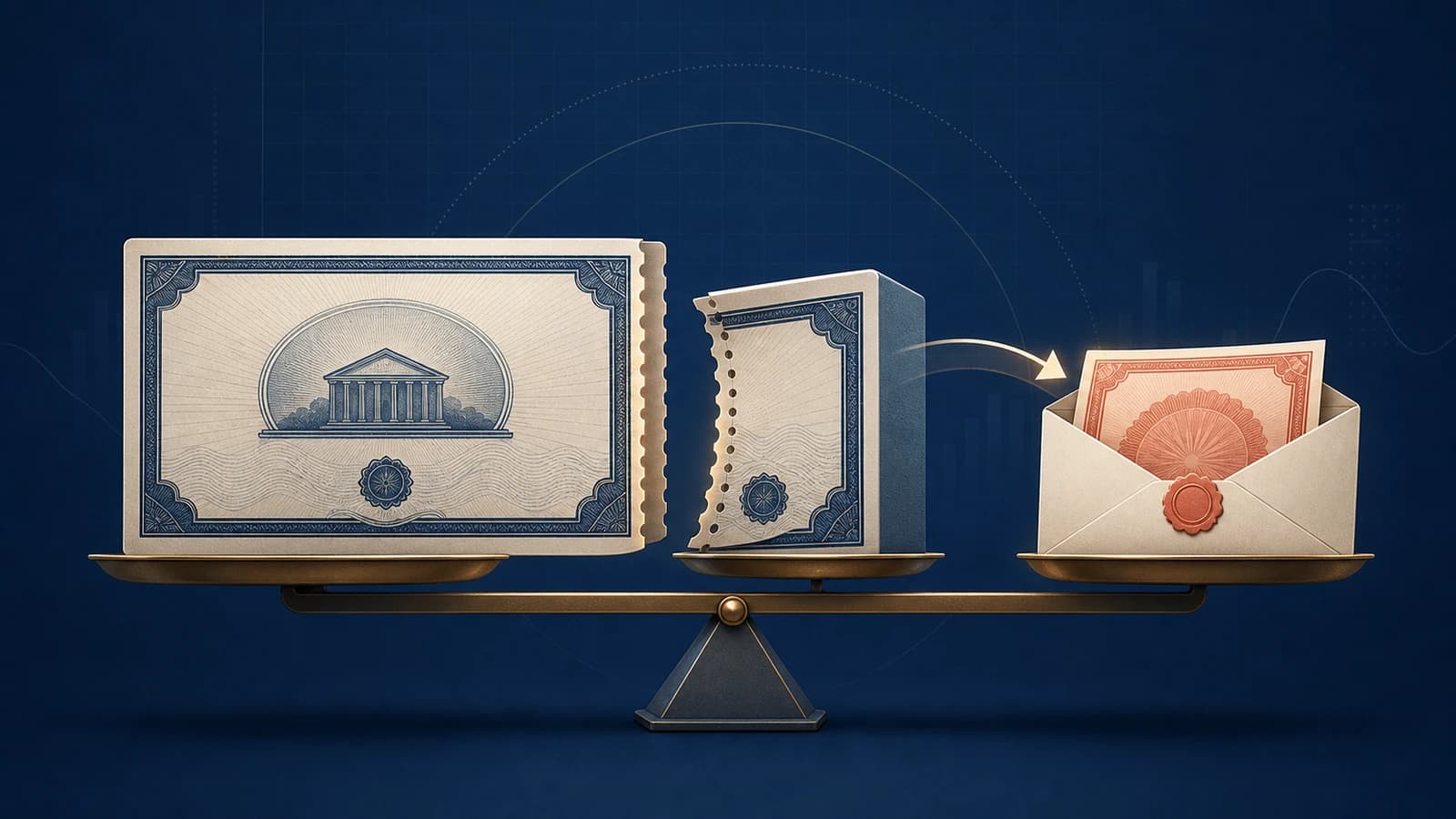
If a $50 stock pays a $1 dividend, it may begin ex-dividend trading near $49. The investor may still have roughly $50 of value before taxes and market moves: $49 in stock plus $1 to be paid in cash.
Suppose a stock closes at $50 and is about to pay a $1 cash dividend. On the ex-dividend date, the stock may begin trading around $49.
Did the shareholder lose a dollar? Not necessarily. An investor entitled to the dividend may now have a share worth about $49 and a $1 cash payment coming later. Before taxes and any other market move, those two pieces still add up to about $50.
The price falls because the right to the next dividend is no longer attached to the share.
A dividend right has a price
Before the ex-dividend date, a buyer is also buying the right to receive the announced dividend. On and after the ex-dividend date, a new buyer does not receive that payment.
FINRA defines the ex-dividend date as the point when a security begins trading without the dividend included in its contract price. Investor.gov likewise explains that a buyer on or after the ex-date does not receive the next dividend; the seller keeps that right.
That change matters even though the business is still the same company. A share with a $1 payment attached is economically different from the same share after the $1 payment has separated from it.
What happens to 100 shares
Assume the market makes a clean $1 adjustment and nothing else changes:
| Position | Before the ex-date | After the ex-date |
|---|---|---|
| Stock price | $50 | $49 |
| Value of 100 shares | $5,000 | $4,900 |
| Dividend receivable | — | $100 |
| Combined value | $5,000 | $5,000 |
The dividend does not create an extra $100 from nowhere. The company is distributing cash that was part of its assets. Once that cash is committed to shareholders, the share trades without the same claim on that money.
The stock will not always fall by exactly the dividend
The $49 price is a clean illustration, not a forecast.
Stocks keep trading while the dividend adjustment happens. Earnings news, interest rates, the broader market, and ordinary buying and selling can push the price higher or lower. A stock with a $1 dividend might fall 40 cents, drop $1.30, or even rise on the ex-date.
The dividend explains one price adjustment. It does not cancel every other force in the market.
Buying one day earlier is not free income
The ex-dividend adjustment is why a quick dividend capture is not automatically profitable.
An investor might buy 100 shares for $5,000 before the ex-date, qualify for $100 in dividends, and then see the stock position marked near $4,900. The cash payment helps offset that lower stock value, but it does not guarantee a gain.
Taxes, bid-ask spreads, brokerage costs, and a larger market decline can leave the investor with less money. Dividend tax and capital-gain rules also vary by country and account type.
The cash usually arrives later
The ex-dividend date is about who has the right to the payment. It is usually not the day the cash reaches the brokerage account.
A company also announces a record date and a payment date. Market rules determine the ex-date around that schedule. The exact timing can differ for special dividends, stock dividends, and different markets, so the company's notice and the relevant exchange calendar matter.
Look at total return, not only the price chart
A price-only chart can make a dividend-paying stock look worse because the chart shows the price adjustment but not necessarily the cash received. Total return combines the stock-price change with dividends, assuming a stated treatment of those payments.
For the shareholder, the useful question is not simply, “Did the price fall?” It is, “What happened to the value of my shares plus the dividend I received, after taxes and costs?”
A falling price on the ex-dividend date does not mean the dividend vanished. It means part of the investment's value moved from the share price into a separate cash claim.