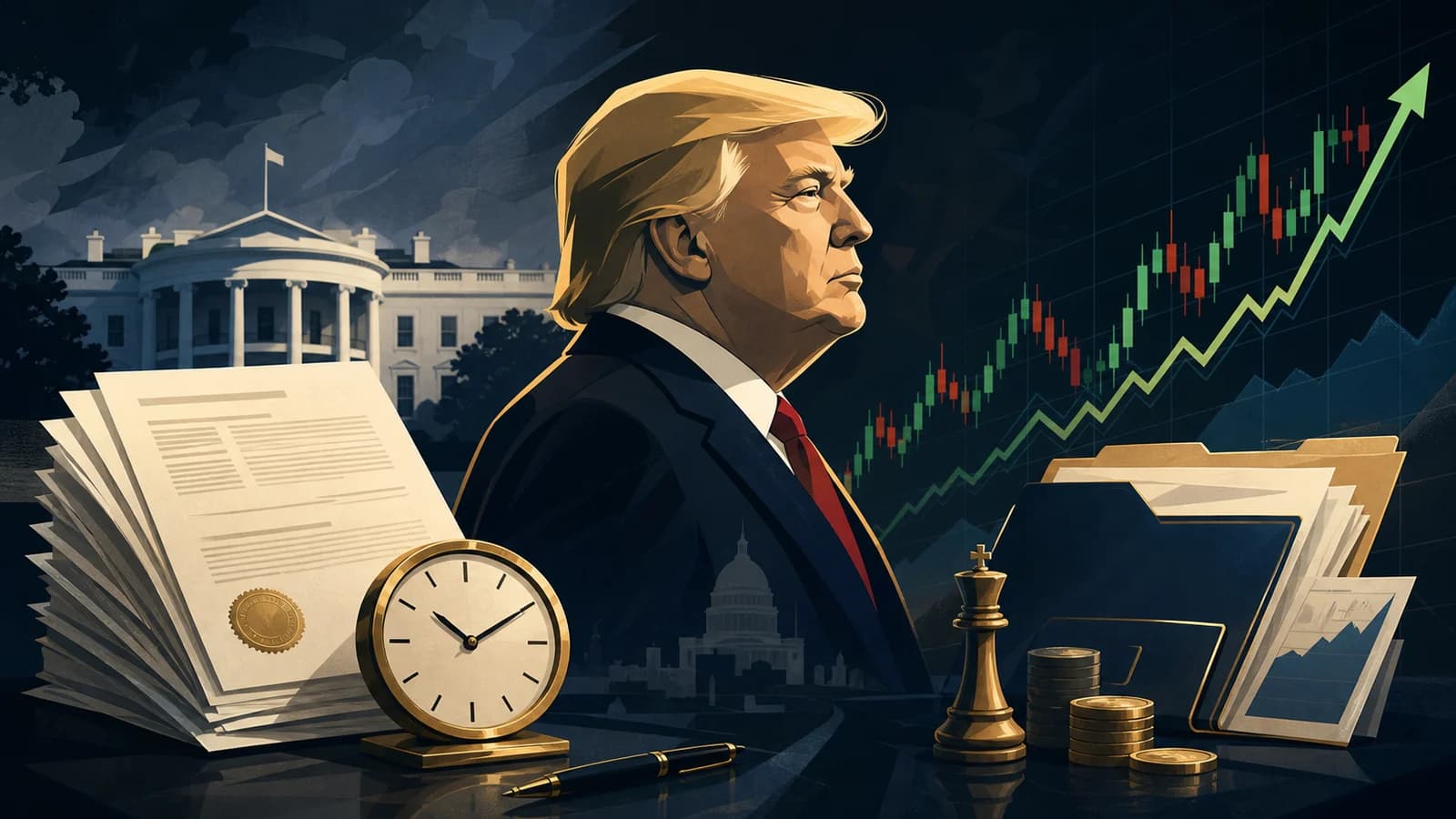
The trades were not new. The disclosure was. Once policy can move stocks nearly 10% in a day, the timing of personal stock trades becomes a market-trust issue.
In early July 2026, The Wall Street Journal reported that President Donald Trump's investment accounts made extensive stock trades around major policy events in 2025. The report focused partly on April 2025, when tariff announcements and a later tariff pause sent the stock market sharply lower and then sharply higher.
The trades themselves were not new. What changed was the disclosure. Once the 2025 financial disclosure became available, reporters could connect the timing of stock trades, tariff policy, and market moves more clearly.
That is why this is not only a story about stock buying. It is a story about timing. When a president can announce policy that moves stocks, personal trading around that window becomes a money and market-trust issue.
Why It Is Back In The News
The April 9, 2025 tariff pause was already controversial at the time. Trump posted that it was a good time to buy before announcing the pause later that day. The S&P 500 then rose 9.5%.
The new round of coverage came from the 2025 financial disclosure. WSJ reported that Trump's investment accounts made more than 21,000 trades in 2025 and that more than $3.6 million was spent on stocks such as Apple and Berkshire Hathaway on April 8. FT separately analyzed the scale of the stock trading across the year.
So the new event is not the trade date. The new event is that the disclosure made the timeline easier to examine.
Why Timing Matters
Policy moves money. Tariffs, interest rates, chip export rules, defense contracts, and crypto regulation can all change the expected cash flow of companies and industries.
If tariffs rise, import costs can rise. If tariffs are paused, investors may price in lower costs and less economic pressure. Those expectations move stocks.
The issue is that a president can help create the market-moving event. If the same person, family, trust, or managed account also owns stocks, investors naturally ask:
That question can damage market trust even before any legal conclusion is reached.
How Big Is A 9.5% Move?
After the tariff pause on April 9, 2025, the S&P 500 rose 9.5%. For one day, that is a large move.
A simple return example looks like this:
| Position Size | Price Change At +9.5% |
|---|---|
| $100,000 | $9,500 |
| $1,000,000 | $95,000 |
| $3,600,000 | $342,000 |
This is not a calculation of Trump's actual profit. The actual result would depend on the specific stocks, prices, timing, and whether those stocks moved like the broad market.
But it shows why the timing matters. If a policy announcement can move the market nearly 10% in a day, the difference between trading before and after that move can be large in dollar terms.
Disclosure Does Not End The Question
Disclosure makes trades visible after the fact. That helps transparency. But disclosure does not automatically remove a conflict-of-interest concern.
The market usually asks three questions:
| Question | What To Check |
|---|---|
| Who made the trade? | Was it a direct decision, family-managed account, or outside manager? |
| What was known? | Was there market-moving nonpublic information before the trade? |
| What asset was held? | Was the asset exposed to the policy decision? |
Trump's side has said his assets are managed by family or outside managers. Critics argue that this still leaves concerns because it is not the same as a traditional blind trust.
The Market Trust Issue
When public power and private market exposure overlap, investors look beyond the price chart. They look at information. They look at timing. They look at whether everyone was trading on the same facts at the same time.
Markets run on numbers, but the numbers depend on trust. A 9.5% rally means one thing when investors believe everyone had the same information. It means something different when the timing of trades raises questions.
This article explains disclosure, timing, and market trust. It is not a legal judgment and not investment advice.