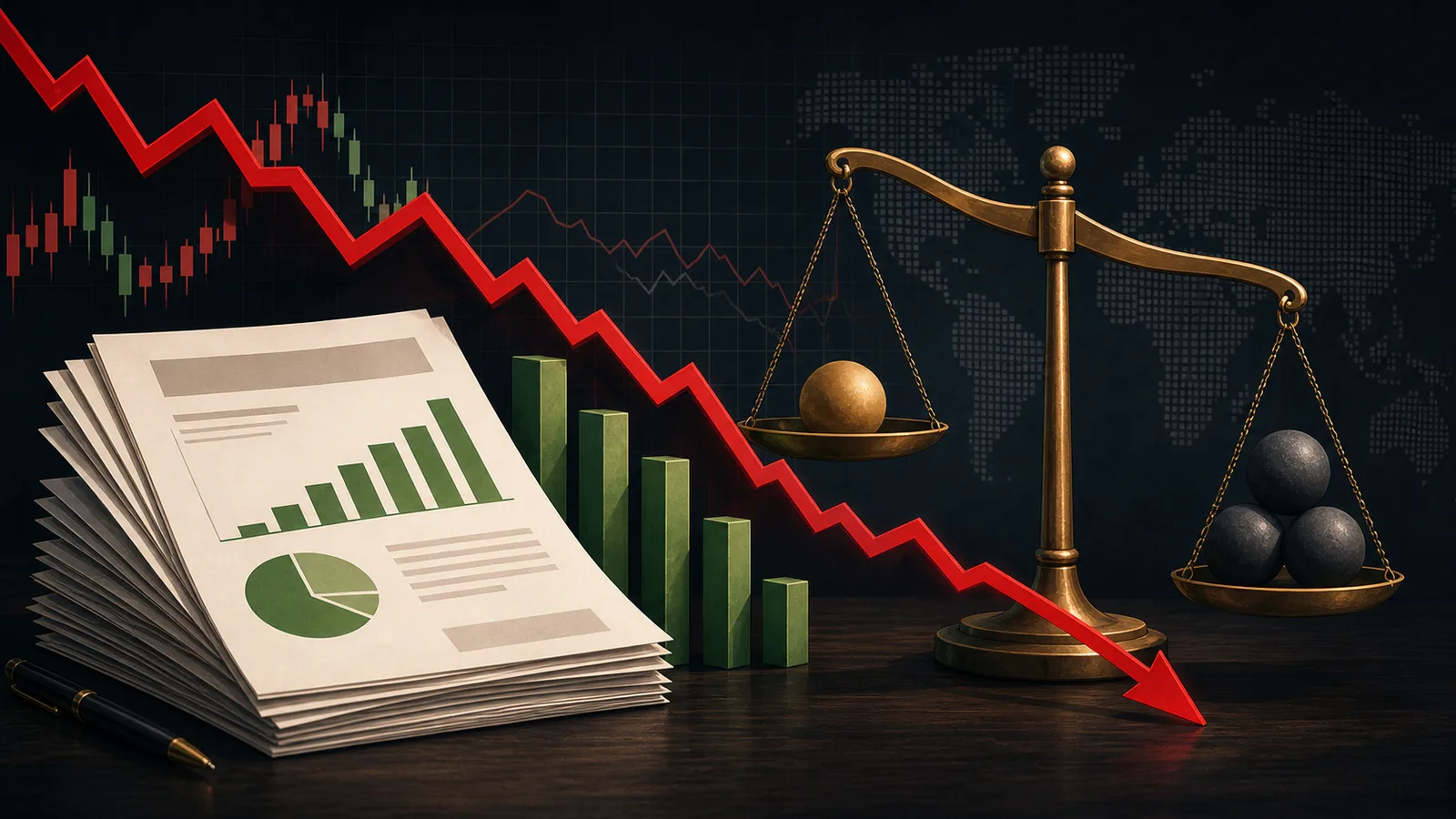
Good earnings do not always mean a higher stock price. If investors expected even better numbers, weaker guidance, lower margins, or a high valuation can turn good news into a loss.
A company reports strong earnings. Sales are up. Profit is up. The headline looks good.
Then the stock falls.
That can feel wrong, but the stock market is not grading the report like a school exam. A stock price is the market's estimate of future money: future sales, future profit, future cash flow, and the risk attached to all of it.
Good earnings can still disappoint if the price had already expected something better.
The stock was priced before the report
Before earnings are released, investors already have expectations. Analysts publish estimates, companies give guidance, and the stock price moves as investors guess what the next report will show.
If a company beats last year's numbers but misses what investors expected this quarter, the stock can fall.
The question is not only, "Was the result good?" It is also, "Was it better than the price already assumed?"
Guidance can matter more than the quarter
Earnings reports are partly about the past. Guidance is about the future.
A company may report a strong quarter and then warn that the next quarter will be slower. Maybe demand is cooling. Maybe costs are rising. Maybe customers are delaying purchases.
In that case, investors may focus less on the profit already earned and more on the money the company may earn next.
Margins can change the story
Revenue growth is not the same as profit growth.
A company can sell more and still make less money per sale. If labor costs, marketing costs, interest expense, or input costs rise faster than revenue, margins can shrink.
Investors often care about that because the value of a stock depends on the cash a business can keep, not just the sales number it reports.
Valuation raises the bar
The more expensive a stock is, the more it has to prove.
If investors pay a high price because they expect fast growth, then ordinary good news may not be enough. The company may need exceptional growth just to support the current stock price.
That is why a stock can fall after a profitable quarter. The business may be doing fine, while the stock was priced for something better than fine.
One-time gains can be ignored
Sometimes a company reports high profit because of a one-time gain, tax benefit, asset sale, or accounting item.
Investors may look past that if it does not tell them much about recurring earnings power. A high reported profit is less useful if it cannot be repeated.
The simple way to read it
A stock does not move only because results are good or bad. It moves because new information changes the market's view of future money.
Good earnings can lift a stock when they raise future expectations. Good earnings can also hurt a stock when they reveal slower growth, weaker margins, or expectations that were already too high.
That is why the same headline can produce different stock moves.